banque crypto compatible

Elodie Trevillot, Deputy General Manager of Risk and Controls at Banque Delubac & Cie, raises the question of the compatibility between banks and crypto. Opportunities, challenges, and the deconstruction of prejudices related to digital assets are at the heart of this presentation, which was also featured during the France Générosités webinar “Cryptocurrencies validated by our trusted third parties” in October 2023.

The Benefits of Blockchain for Banking

Blockchain offers several advantages such as speed, transparency, increased security, and simplification of compliance processes. Specifically, the interest of banks in offering services related to digital assets and blockchain now seems indispensable to meet user needs.

Cross-border Payments

Blockchain technology offers many advantages for cross-border payments: fast and economical. Indeed, payments are instantaneous even when geographical borders are involved. Moreover, the costs associated with transfers can be significantly reduced by avoiding currency conversion fees and high costs of international transfers.

Credit Management

Blockchain is a source of opportunities for the syndicated loan market, from mandate management to servicing and tokenization. The elimination of intermediaries and the immediacy of transactions allow a reduction of the granting process from several days to a few hours. For example, JP Morgan’s ONYX platform and BBVA’s syndicated loan platform for businesses. Companies can benefit from a faster and more efficient credit process, allowing them to obtain funding more quickly for their financing needs.

Management of Financial Instruments

The tokenization of assets is a real challenge for economies of scale. Indeed, representing physical or financial assets as digital tokens on a blockchain allows:

  • reduction of delays thanks to the instantaneity of the blockchain, thus eliminating the processing delays often encountered by traditional systems,
  • elimination of intermediaries, thus reducing associated delays and costs,
  • cost reduction through the automation of processes, reduced delays, and intermediaries.

Growing Interest of the French in Crypto

Digital assets are increasingly present in the minds of the French. In 2023, no less than 85% of the French had already heard of these new forms of investment. This growing popularity is confirmed with 26% of the French declaring their intention to acquire digital assets in the future. Moreover, it is interesting to note that 13% of French people over 18 years old have already owned digital assets, such as NFTs or stablecoins. Digital assets are truly emerging as a new asset class that is attracting the interest of the French.

Nearly 30% of people would be ready to switch banks for an institution offering services in digital assets.

Faced with this enthusiasm, banks must understand the importance of adapting to these new uses and seizing the many opportunities offered by this technological innovation. This data highlights the importance for banks to rethink their offerings and provide tailored banking and financial solutions to meet the expectations of their clients and remain competitive in the constantly evolving financial market.

Adaptation of Banks to Digital Assets

To meet the new uses and needs of clients, banks must adapt by evolving:

  • Regulatory framework: to offer services related to digital assets in France, banks must obtain a registration or approval as a Digital Asset Service Provider (PSAN),
  • Internal mechanisms: towards new tools, training of employees, awareness of new challenges, etc., to meet the specificities of digital assets,
  • Risk policy: to integrate the specificities of digital assets (volatility of cryptocurrencies, decentralization of blockchains, cybersecurity, regulatory compliance).

Banque Delubac & Cie supports players in the crypto-assets and web 3 ecosystems to seize the opportunities of this new asset class.

Opportunities for Banking Services Related to Crypto

The growing popularity of cryptocurrencies in France and the possibilities offered by blockchain technology open real opportunities to offer services tailored to client needs.

Management of the Conservation of Digital Assets

Many individuals wish to rely on a trusted third party to ensure the secure conservation of their digital assets. Banks, for their part, have solid technological infrastructures that could meet these needs, particularly in terms of cybersecurity. With their experience in protecting traditional financial assets, banks are well-positioned to offer these services. Their expertise in risk management, regulatory compliance, and data protection can be extended to digital assets. Banks can thus play an essential role in offering reliable and secure digital asset conservation solutions, meeting individuals’ expectations for trust and protection of their investments.

Management of Crypto Asset Purchases and Sales

Banks already have mechanisms to meet client needs in digital assets, particularly through their experience in managing transactions related to financial securities. The key principle in this area, “best execution,” aims to ensure that transactions are carried out in the most advantageous way for clients, considering criteria such as price, speed, and security of execution. This principle is naturally applicable to this new asset class.

Crypto Investment Advisory

Banks already offer value-added services such as investment advice, wealth engineering, etc. In the evolving market and technologies, many clients express the need for advice on investing in digital assets, as part of diversifying their exposure. Indeed

, cryptocurrencies, tokens, and NFTs are gaining popularity as a full-fledged asset class. Naturally, clients are looking to take advantage of this new investment opportunity while needing expertise in this complex environment.

Deconstructing Prejudices Related to Crypto Assets

Mistrust towards crypto-assets largely stems from past scandals and a lack of understanding of this innovative technology, often perceived as complex.

The majority of crypto assets are used legally

The increasing use of crypto-assets for illicit purposes remains below 1% since 2019.

Regulation has aligned the anti-money laundering obligations of digital asset service providers with those of banks:

  • obligations to know the customer
  • constant monitoring of operations to identify those with an unusual or illicit character
  • direct link with the authorities via an obligation to report to TRACFIN (Treatment of Intelligence and Action against Clandestine Financial Circuits)

At the European level, requirements will be standardized with the implementation of the MiCA Directive (Markets in Crypto-Assets). At the international level, regulation governing digital assets tends to become stricter.

Blockchain does not promote anonymity

The blockchain is public. Indeed, it is a distributed ledger system, transparent and accessible to all, where transactions are recorded immutably and verifiable by all network participants. Pseudonymity is common on the blockchain, not to be confused with anonymity. Authorities can even trace transactions back to individuals holding public addresses as in the Silk Road or Bitfinex cases. Thus, authorities have begun to identify IP addresses that are linked to money laundering or sanctions circumvention circuits (USA, UK, OFAC).

Crypto assets are not the preferred tool of money launderers

The main AML-CTF risks come from the use of specific tools or decentralized platforms:

  • Mixers: they break the link between the origin address of the transaction and the destination address to ensure the anonymity of certain transactions;
  • Decentralized platforms: they do not meet the requirements of regulated platforms and do not always apply rules reducing the risk of money laundering;
  • Anonymous assets: digital assets such as Monero or Zcash emphasize the anonymity of transactions. Unlike traditional cryptocurrencies like Bitcoin, they are not recorded on a public blockchain, and the senders, recipients, and transferred amounts are masked.

Blockchain-specific AML-CTF tools

Blockchain analysis tools complement existing customer knowledge and business relationship monitoring tools. The most commonly used blockchain analysis tools, such as Chainalysis, Coinfirm, Scorechain, or TRM, now have more than 5 years of seniority and are capable of:

  • multifactorial analysis: entity (the Exchanges), addresses, and transactions.
  • integration of risk management rules specific to each user (for example, country risk, high-risk sectors)
  • extending the analysis on certain blockchains up to 1000 hops
  • identifying risks (for example, identifying mixers)

The features and use of these tools are subject to analysis by authorities in the context of PSAN registration and approval requests.

Sources:

  1. ADAN KPMG Study, 2023, Web 3 and Crypto in France and Europe: adoption by the general public and applications in industries.
  2. Chainalysis 2023 Report
actualités économique

THE TROUBLED REAL ESTATE MARKET

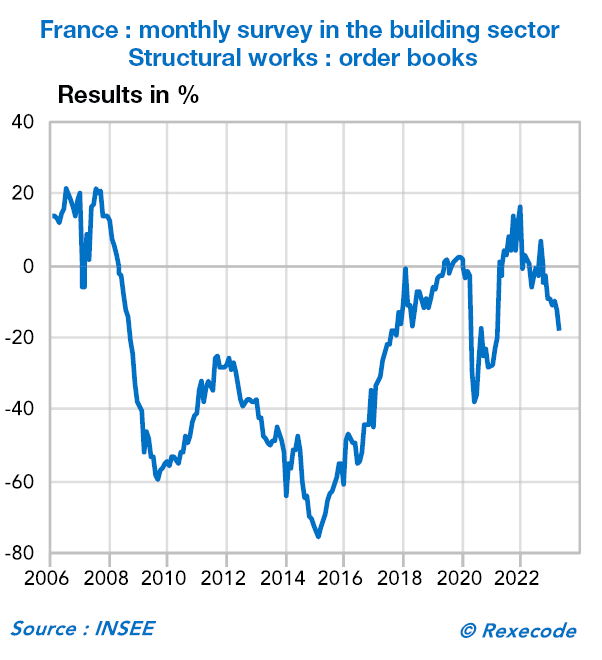
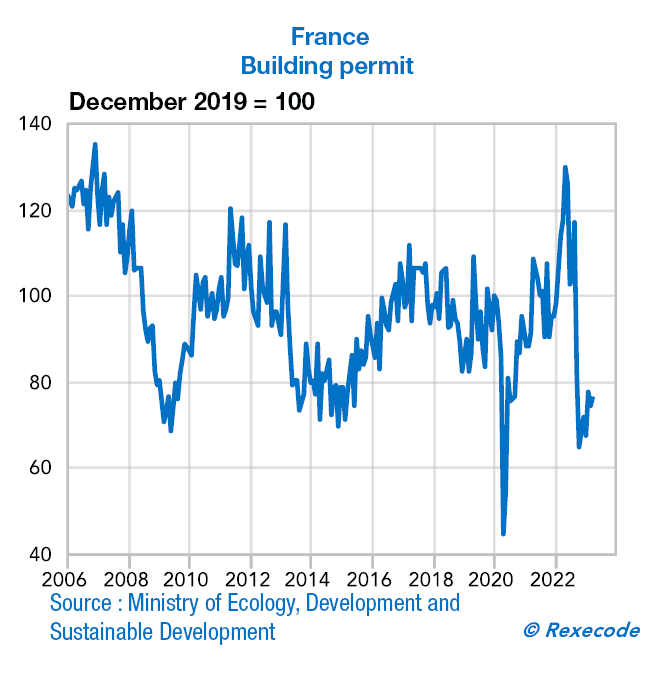
“The real estate market is suffering”, warns Henry Buzy-Cazaux, founding president of the Institut du Management des Services Immobiliers (IMSI), in Capital on 17 April: over the last twelve months, purchases of new and old housing have fallen by 30% , just like construction, which is supposed to increase and renew the stock.

This scenario is a serious threat to employment in the sector, which is the first in the economy with two million direct and indirect jobs, and also to public revenue, of which real estate is one of the main forms of resources. With the needs of households not being satisfied, this creates a social risk and a brake on their mobility.

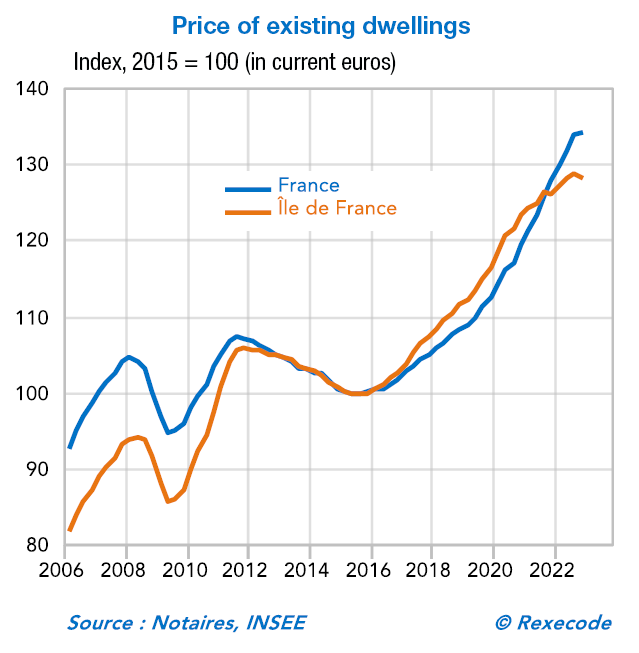
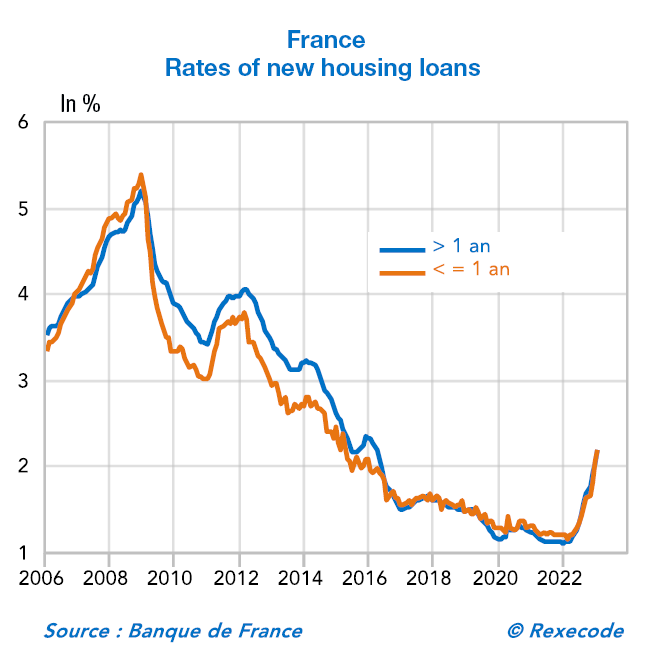
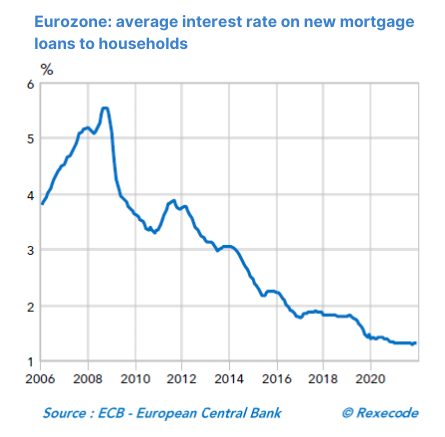
Prices are not falling, but the signing of sales agreements fell by 25% in the first quarter at Orpi, one of the main networks of real estate agencies in the country, a warning sign of things to come. Demand is shrinking, mortgages are becoming more expensive: for the first time since 2014, the average interest rate has exceeded 3%.  

Apart from the more stringent loan conditions, real estate is subject to an accumulation of constraints linked to the fight against global warming and which are becoming truly suffocating. The “DPE” (Energy Performance Diagnosis) prevents the rental of badly classified apartments (G+ since 1 January, G in 2025, F in 2028, etc.), and many owners do not want to carry out the work and prefer to sell at a loss.

 From 1 April, the sale of a dwelling rated F or G must be accompanied by an “Energy Audit” detailing the work to be carried out in order to improve its insulation. For a detached house, this work can be estimated between 40,000 and 60,000 euros, i.e. 30 to 40% of its value in areas where there is no imbalance between supply and demand for rental housing!

Rental real estate, which attracts investment and contributes to renewing and increasing the existing, sees its yields drop: economic context (increasing interest rates), weight of taxes (property tax), ecological standards. Especially since rents are not in line with acquisition prices and charges because they are regulated (and some cities even block them).

Is social housing a solution? The new PLU (Local Urban Plan) of the city of Paris sets the objective of 40% social housing by 2035, in particular by requiring owners of private housing or office buildings “to add social housing in the event of restructuring. A prospect that provoked an outcry among both investors and property developers”. (Les Echos, 11 April). This could discourage private capital from investing…

Between high taxation, restrictive and costly energy regulations, regulated rents and social housing, this context is not very favourable to private real estate. 


Sources : Rexecode, Banque Delubac & Cie, Refinitiv, Turkstat, INDEC, Central Administration for Statistics, INSEE

Banque Delubac & Cie has obtained its registration as a DASP

Banque Delubac & Cie, the first French bank authorised to offer a crypto-asset service.

Banque Delubac & Cie has obtained its registration as a DASP (Digital Assets Service Provider) with the AMF (Financial Markets Authority) and the ACPR (French Prudential Supervision and Resolution Authority). It is about to officially launch its offer for the purchase, sale and custody of crypto-assets for institutions, businesses and individuals.

Banque Delubac & Cie therefore becomes the first French bank to offer this type of service.

The offer will be aimed primarily at companies wishing to invest part of their cash in crypto-assets, at institutions wishing to offer a secure digital asset custody service for their clients and finally, at individuals wishing to buy, sell and hold crypto-assets. The service offered by the Delubac & Cie bank will make it possible to invest in crypto-assets with the highest possible level of security.

Each client portfolio will correspond to a separate private key; under no circumstances will client assets be pooled.

Initially, the first three digital assets offered will be Bitcoin, Ethereum and Tezos. This offer will make it possible to invest in digitised or tokenised real assets as well as NFTs (Non-Fungible Token) and to have access to staking. Other digital assets will be made available to clients based on demand.

Banque Delubac & Cie is the first French bank registered as a Digital Asset Service Provider1.

1 Banque Delubac & Cie’s offer relating to digital assets is governed by its registration with the AMF under number E2022-33. This offer does not fall within the services covered by the bank’s authorisation as an investment services provider.

>> Read the press release of 06/04/2022

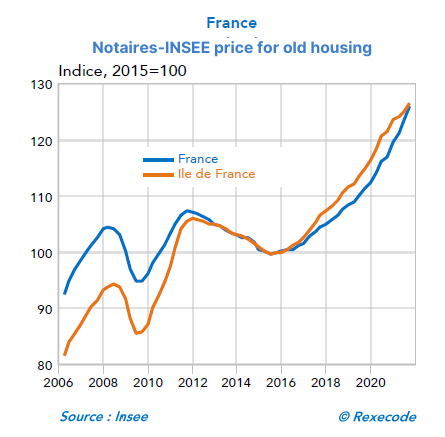
Real estate in France has been experiencing a rise in prices since the early 2000s. The Covid pandemic, with the fall in GDP that followed the confinements, has not reversed this trend. In Europe, despite the specificities of each market, prices are also rising to a greater or lesser extent, even in Germany, which had long been spared.

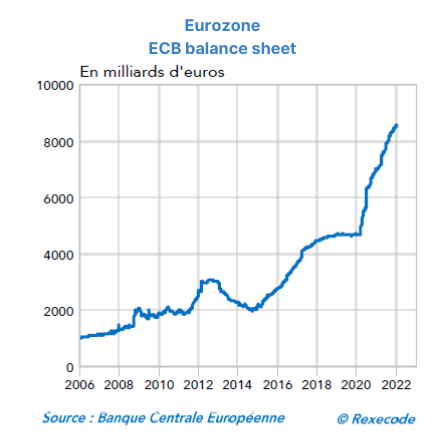
The fundamental cause is the expansionary policy of the European Central Bank (ECB): the quantity of money is increasing more rapidly than the volume of goods and services available, consequently prices rise. Not mechanically of course, because at the same time the speed of the circulation of money is falling (during the Covid, savings have increased, money is “frozen”), which mitigates the progression of prices. But in recent months, we have experienced unprecedented levels of money creation..

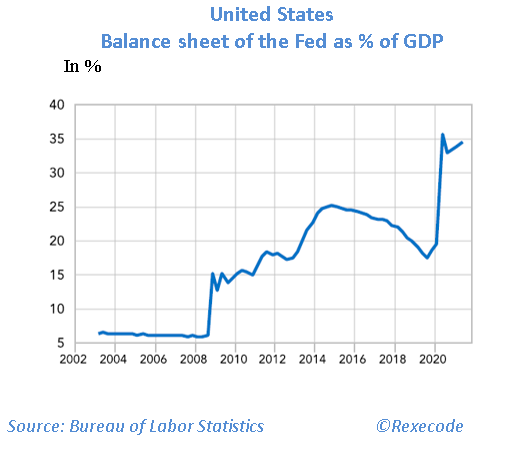
The balance sheet of the ECB has increased by more than 3,000 billion euros since the start of the Covid crisis, from 5,000 to more than 8,000 billion euros. It is literally money created ‘out of nothing’, by a paper exercise, in order to subscribe to the loans issued by the States facing the gigantic deficits caused by the pandemic. There had been so-called “money printing” before, during the subprime crisis of 2008, then during the Greek debt crisis in 2011, but the current period far exceeds them both. The ECB’s balance sheet total is equivalent to 81% of Eurozone GDP, compared to 37% for the Fed, 41% for the Bank of England. Only the Bank of Japan has more (134%), but the debt is entirely held internally, which changes the situation. The vertiginous rise we are witnessing is not about to stop as the budget deficits in France and in the countries of southern Europe remain high and are slowly being reduced.

It is very likely that monetary policy in the eurozone will remain expansionary in the years to come, for several reasons:

– the sustainability of public debts must be ensured, a rise in rates would strangle several countries and push them into default;

– it is necessary to allow the financing of the energy transition, which is very costly. Moreover several countries, including France, are beginning to issue “green bonds” for this purpose;

– the current rise in inflation is considered by the ECB to be transitory, and therefore does not call for a change in direction.

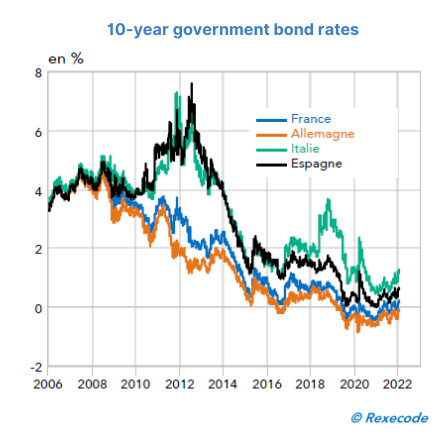
These low rates which, with the return of inflation, bring negative real interest rates, will cause an increase in the prices of real estate, stocks, cryptocurrencies and real assets in general (gold, works of art, vintage cars). Indeed, these assets cannot be “printed”, Picasso paintings or Ferrari Daytonas are no longer produced, and gold or real estate increase very little from year to year, so they constitute safe havens to preserve purchasing power over time. Stocks and Bitcoin are volatile and put many investors off, the art market is complex, so real estate is the investment choice for most savers and for many investors.

As a result, housing prices will continue on this rising trend and, except for those who already have significant assets, this is not good news, for several reasons: 

  • it makes access to housing difficult for young people and the middle classes;
  • wealth inequalities will increase, generating a feeling of injustice and protests;
  • such a rise runs the risk of a financial crisis if real estate prices ever drop.

In addition, the energy transition generates heavy constraints: “Technically, the bans on renting ‘energy strainers’ could remove 3 million housing units from the rental stock, including 700,000 in 2025 alone!” according to Jean-Marc Torrollion, President  of the FNAIM (French Federation of Real Estate), with many owners recoiling from the cost of the work. And when supply is restricted, prices increase, in this case for rental, but energy saving standards will also make construction more expensive.

Commercial real estate will also be impacted: from 1 January 2022, landlords and occupants of surfaces of more than 1,000 m² will be forced to reduce their energy consumption on the basis of those of 2010 by -40 % by 2030 (i.e. in just 8 years), on the pretext that buildings represent 25% of greenhouse gas emissions in France.

 What are the means of action to slow down or stabilise property prices?

  • The ECB renouncing its expansionary monetary policy, but this scenario is not very credible, as default on sovereign debt constitutes too serious a risk;
  • Use the macroprudential regulation of banks (increase in capital requirements associated with mortgage loans) in order to restrict credit demand. The effect will be limited because the incentive to invest in real estate will remain strong (inflation will not be so transitory, as stated Jerome Powell, Chair of the US Federal Reserve);
  • Tax real estate capital gains more heavily, with the underlying idea, still very popular in France, of “making the rich pay”. This measure would nevertheless be costly in terms of votes, and have limited effect, as the remaining capital gains would in any case be a better option than letting your money lie dormant.

As we can see, there is no real solution to the excessive rise in real estate prices due to a durably expansionary monetary policy. We will have to deal with and accept the disadvantages of this situation: difficulty in accessing housing, increase in wealth inequalities, risk of financial crisis in the event of a market downturn. However, a market with rising prices is also an opportunity, of course, even if the level of risk increases. The housing market will become more difficult, but also more exciting!


The balance sheet of the ECB: https://twitter.com/Schuldensuehner/status/1463155482659540996

 “Technically, the bans on renting ‘energy strainers’ could remove 3 million housing units from the rental stock, including 700,000 in 2025 alone!”, according to Jean-Marc Torrollion, President of the FNAIM

https://www.capital.fr/immobilier/immobilier-la-hausse-des-prix-nest-pas-tenable-selon-le-president-de-la-fnaim-1421663

 From 1 January 2022, landlords and occupants of surfaces of more than 1,000 m² will be forced to reduce their energy consumption on the basis of those of 2010 by -40 % by 2030 (i.e. in just 8 years), -50 % by 2040 and -60% by 2019

On 15 August, we celebrated an important anniversary, even if it did not make the headlines, a half-century anniversary, the figure is symbolic, that of the suspension of the convertibility of dollars into gold, proclaimed by Richard Nixon on 15 August 1971 during a televised speech. A suspension announced at the time as temporary, which is not without irony, but we were then moving into uncharted territory.

This was a fundamental shift because money had always been linked to gold or silver. It even identified with it for centuries through the coins that circulated, or documents that attested that they represented such weight in gold, which allowed the development of banking. With the Bretton Woods Agreements signed in 1944, we were no longer in a strict gold standard as in the nineteenth century but in an unbalanced system where gold and the dollar had the same status of reserve currency, in a ratio of 35 dollars per ounce (31.1 grammes) the other currencies being in the background. The writing was on the wall and the temptation was great for the United States to make the dollar the only reserve currency in the world and to free itself from the constraint of gold, which it then went on to do half a century ago.

However, we must not idealise the past, the period before 1971 did not constitute a monetary “golden age”, manipulations have always existed: gold coins were chipped, their gold content fell without their face value changing, the strict gold standard did not prevent banking crises (end of the 19th century), the reintroduction of the gold standard without taking into account the inflation due to the First World War caused serious imbalances during the interwar period. But, despite everything, the physical limitation of the quantity of gold available was a constraint, whereas now the dollar and the major currencies can be printed without limit. We speak of “fiat money”, the term fiat being a Latin word meaning “let it be done”, which is found in the expression “fiat lux” (“let there be light”) used by God in Genesis.

What we have lost with the gold standard is a safeguard, moving towards a regime where money can be created according to need without structural limits. However, this is not without risk. Inflation, although brought under control today, can easily turn destructive. Beyond the dispossession of savers, it can erode purchasing power, create shortages and disrupt the economic calculations of entrepreneurs, to the point of casting doubt on the value of the currency, in the worst scenario. To regain a lasting balance, states must imperatively reduce deficits and establish a timetable for the end of stimulus plans which, although they make it possible to deal with an exceptional situation, have the disadvantage of increasing the debt. Growth can also be found in lowering the level of taxes and levies, and in simplifying standards and bureaucracy.

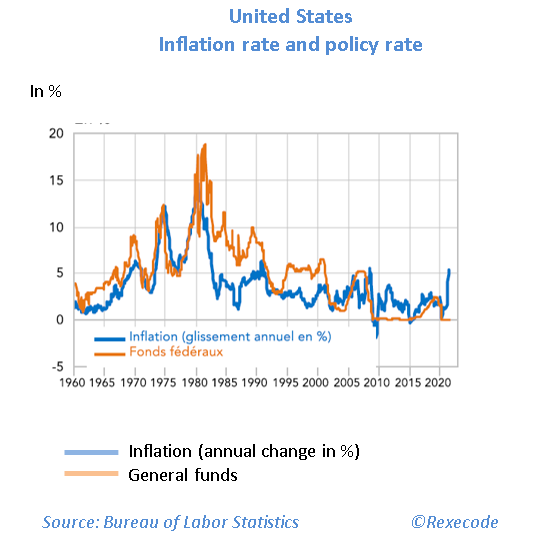
Therefore, a healthy situation comparable to the 1980s and 1990s could be restored. In brief, we should be much more careful with money and impose a discipline comparable to that of the gold standard, even if it means adopting more modern criteria. The experiment of a dollar having no other reference than itself almost came to a rapid end with the price change of the 1970s (13.5% inflation in 1980 in the United States). However, energetic central bank (Fed) boss Paul Volcker increased the policy rate to 20% in 1981, a staggering figure today, and he brought inflation under control within a few years.

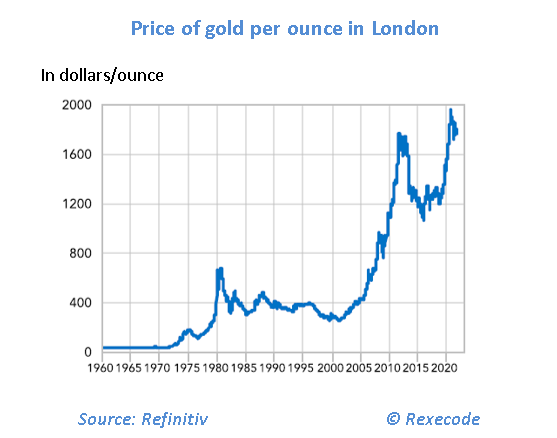
The 1980s and 1990s combined low price increases, economic growth and the relative stability of the price of gold, between 300 and 400 dollars an ounce, as if we had returned to a de facto gold standard … But how can we explain this? The inflation of the 1970s having served as a lesson, states contained their deficits, reformed (except France), real interest rates were high (which corresponds to a normal situation), and the growth of the economy was not based on debt but came from the deregulation of important sectors such as telecoms (which will give birth to the internet and the mobile phone), the airline sector (explosion of mass tourism); it is the supply policy started by Ronald Reagan and Margaret Thatcher. Organic growth and healthy currency were the reasons why we had returned to a quasi “gold standard”.

A total turnaround occurred at the beginning of the new millennium with the crash of technology stocks in 2000 and the attacks of 11 September 2001: in an attempt to avoid a depression, the Fed sharply cut its policy rate , money became “free”. A mortgage bubble followed, facilitated by a deleterious financial innovation, the subprimes, and we know the rest of the story with the crash of 2008. The debt crisis of the eurozone in 2010-2012 brought the European Central Bank (ECB) to follow the Fed’s policy. The price of gold evolved to progress from 2002, then especially 2005 to pass from 400 dollars an ounce to nearly 1,900 dollars in August 2011. The central banks took matters in their own hands, managed to reassure, and gold fell in 2013 and 2014, but resumed its progression from mid-2018. Then the emergence of the Covid-19 pandemic and the lockdowns caused budget deficits to explode and led central banks to spin the printing press to an unprecedented level.

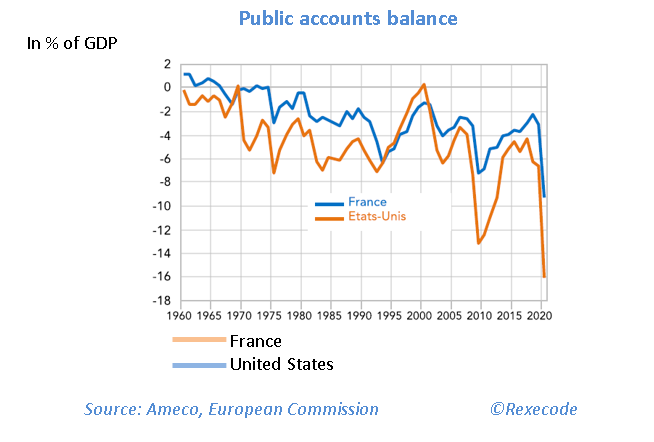
This is where we are now, and the novelty of recent months is the return of inflation: the United States is on an average trend above 5% per year, Germany is at 4%, France should soon pass the 2% mark. The problem is that it is now impossible to do what Paul Volcker did in his time, that is to say to significantly increase the policy rate to defeat inflation, there is indeed such an amount of debt, both public and private, that the entire monetary and financial system would face a terrible crisis.

Sources : Rexecode, Banque Delubac & Cie, Refinitiv, Ameco, Commission européenne, Bureau of Labor Statistics